Each work with its photos, provenance, value and place. Lightboxes for proposals and moves, labels and certificates on your letterhead, exports whenever you want them. Built by a working collection, kept on your own database.
Try the demo See what is inside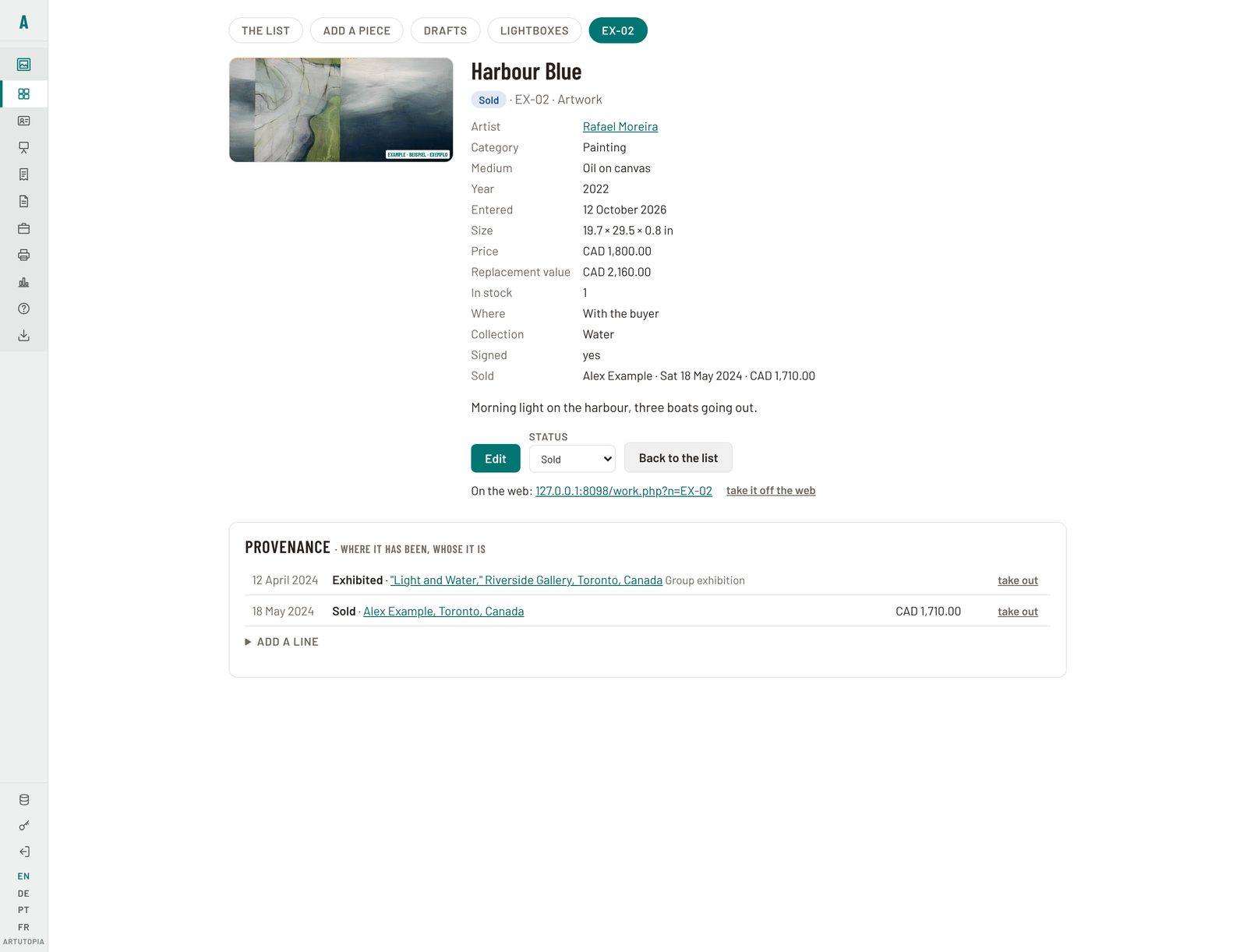
The Catalogue was not written by a software company guessing at how art is handled. It grew out of a working art rental business with thousands of pieces moving in and out every year, and out of an artist's own archive of nearly five thousand works. Every page is there because somebody needed it on a real afternoon with a real piece in their hands.
Photographs, artist, medium, size, year, price and replacement value, where the piece is, its exhibitions, loans, gifts and sales. Contacts, galleries and shows are their own records, so a collector or an exhibition is entered once and linked to every piece involved.
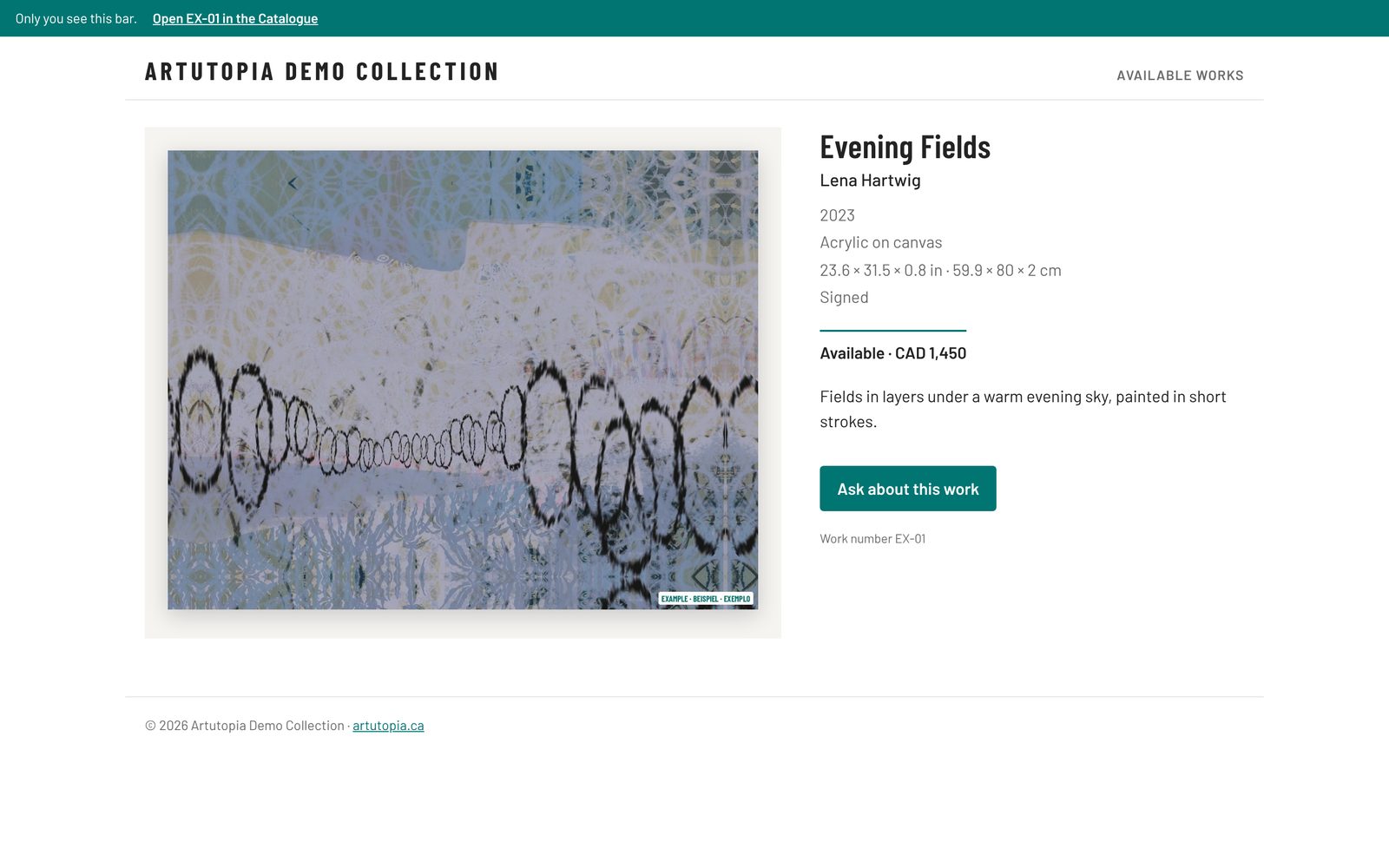
Each work carries its photo, its facts and its provenance: exhibited here, sold to this collector on that date, on loan to that gallery. Status changes with one click, and the piece can be switched onto a public page for the world to see.
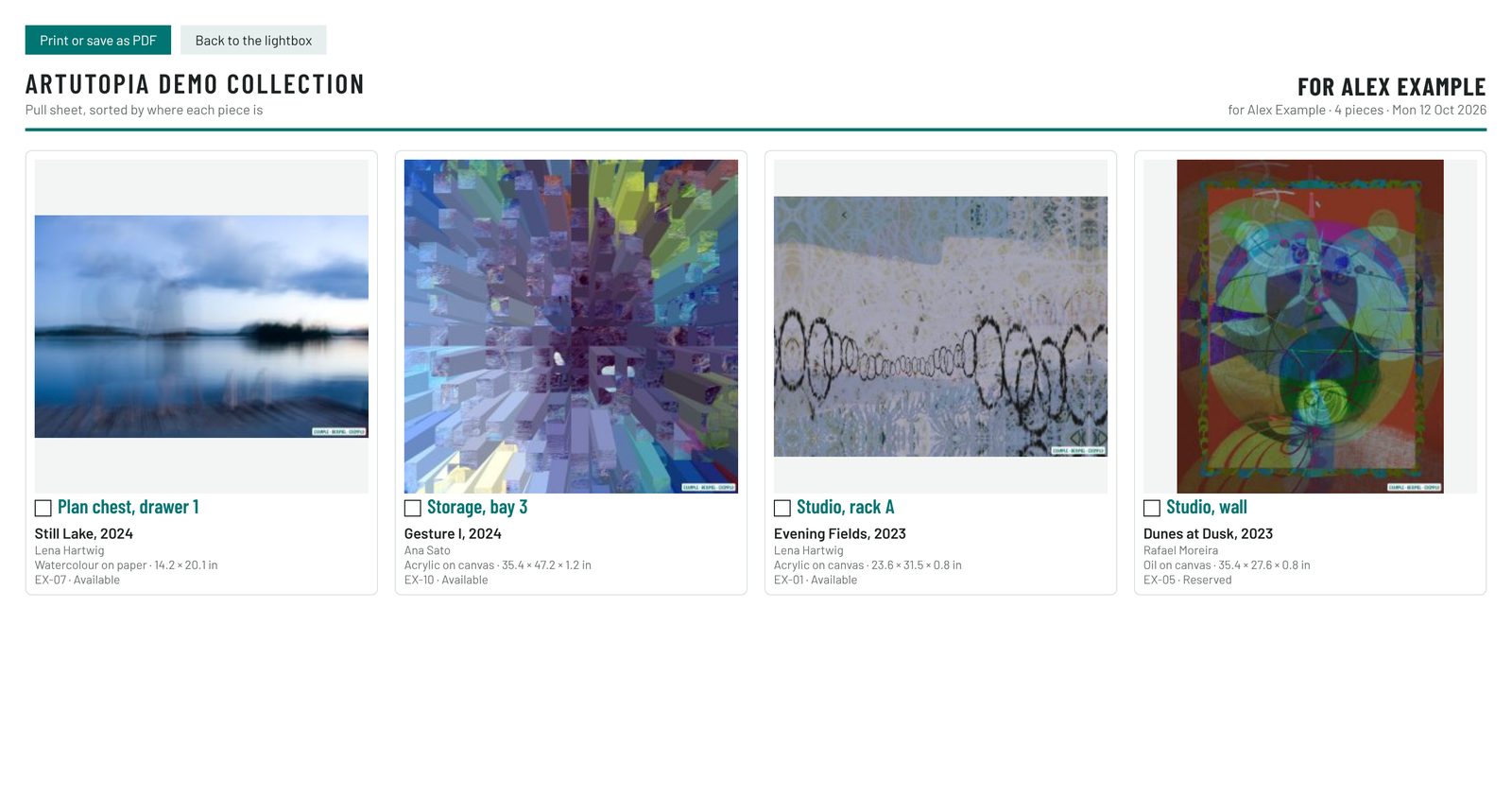
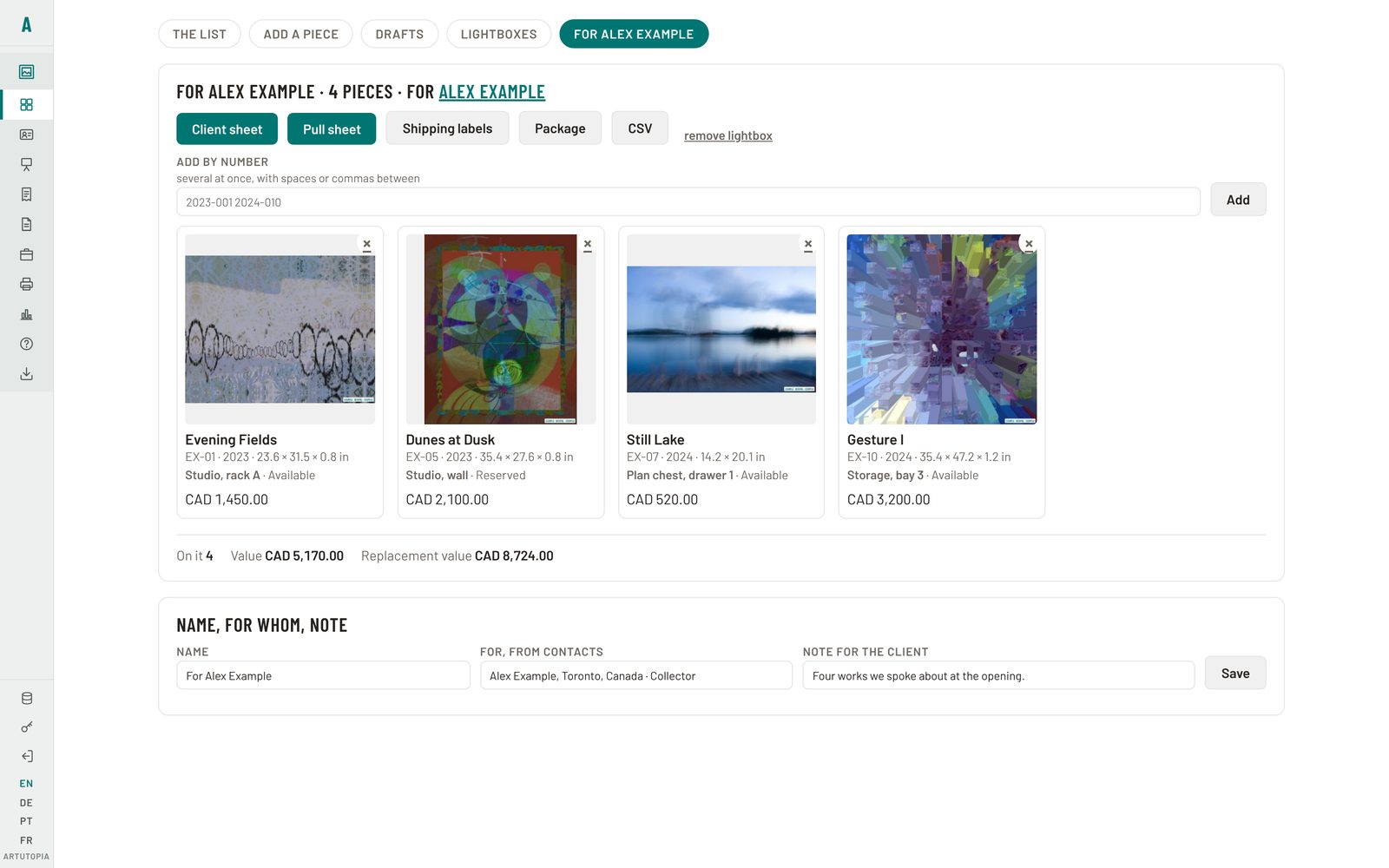
Gather any selection of pieces for a client, a show or a relocation. Print the client sheet with or without prices, the pull sheet sorted by where each piece is, shipping labels with a QR code, or export exactly those pieces as a spreadsheet.
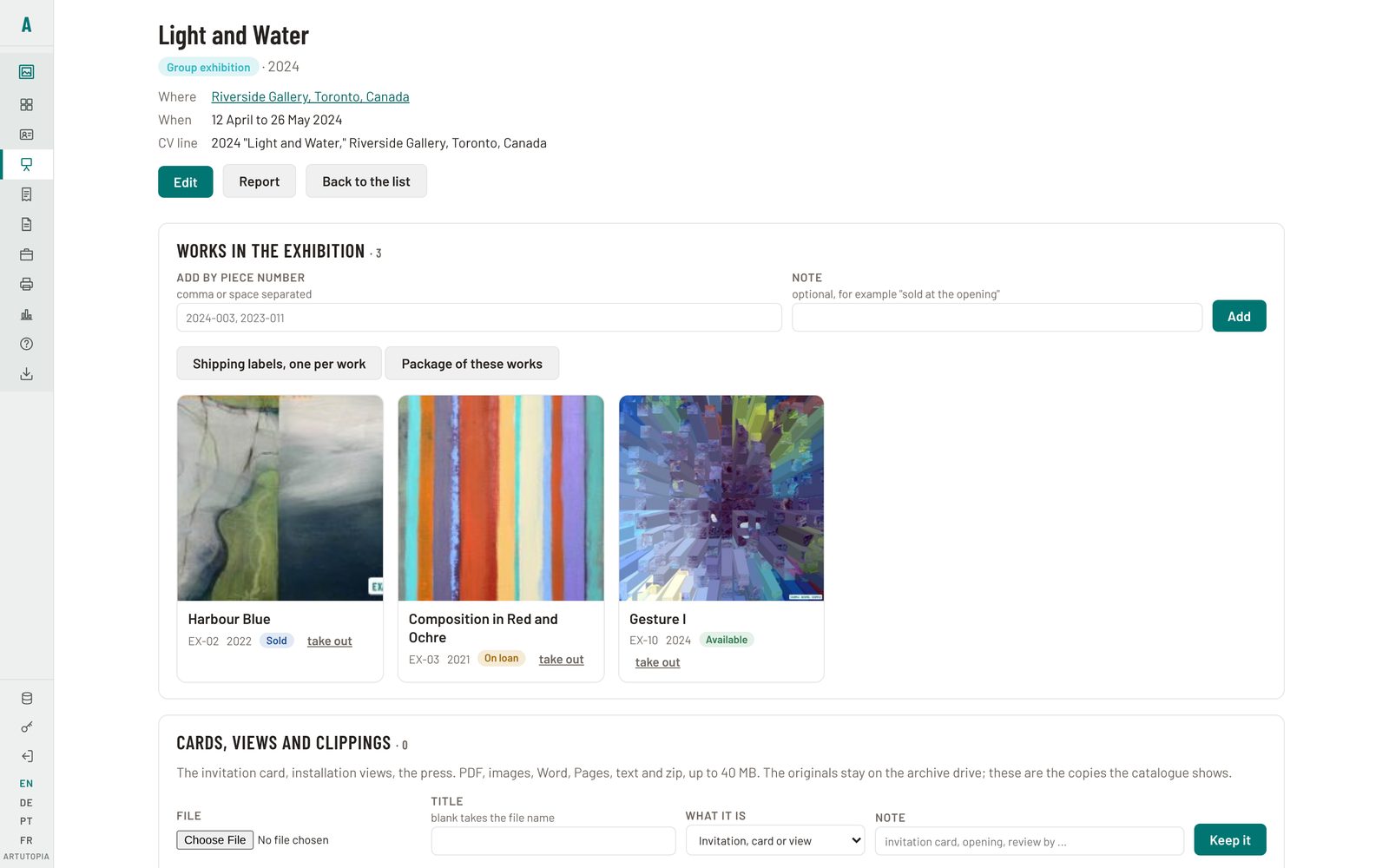
An exhibition knows its venue, dates and works; the works know their exhibitions. Invitations, installation views and press go with the show. Contacts hold collectors, galleries, lenders and the invoices that belong to them.
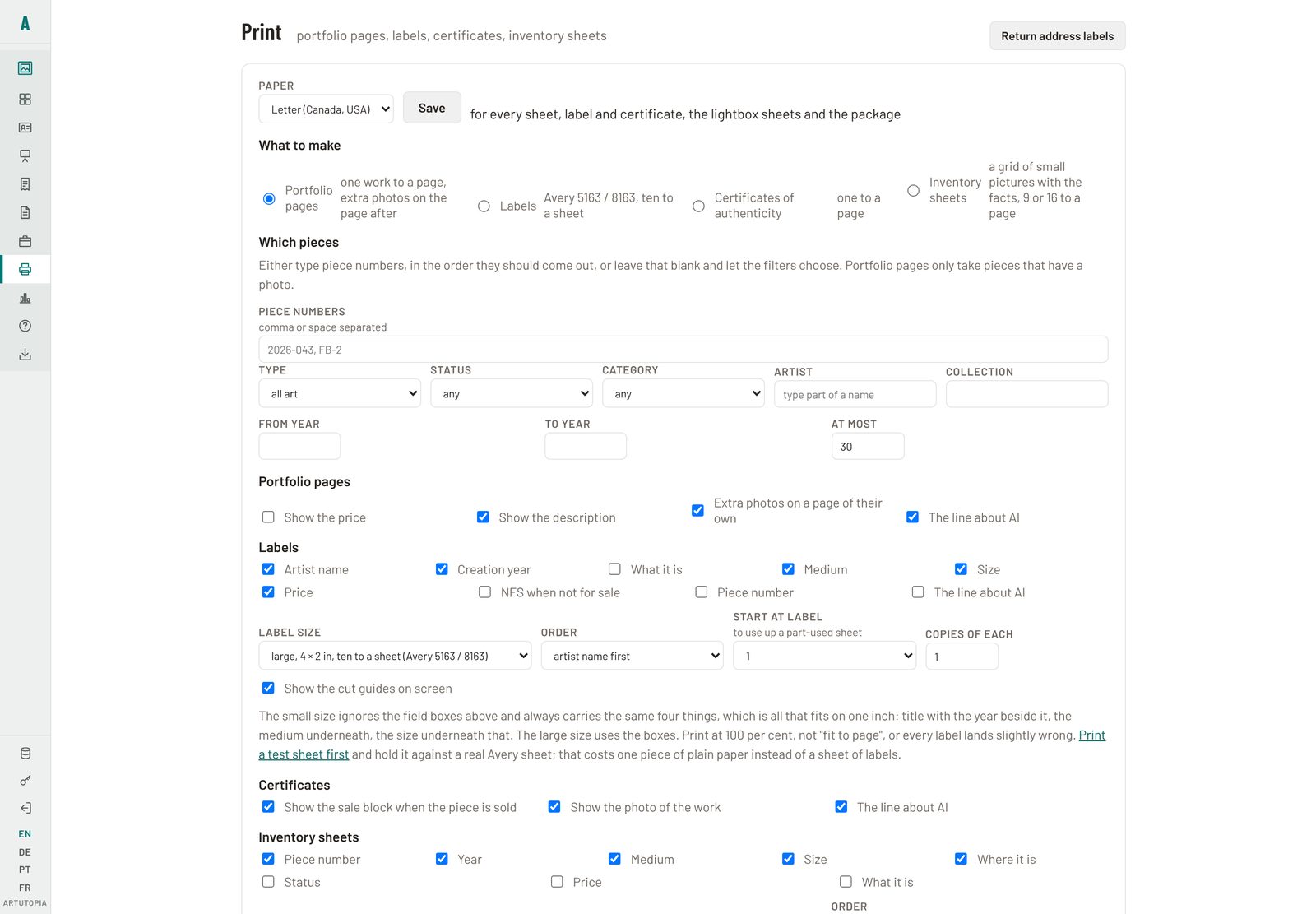
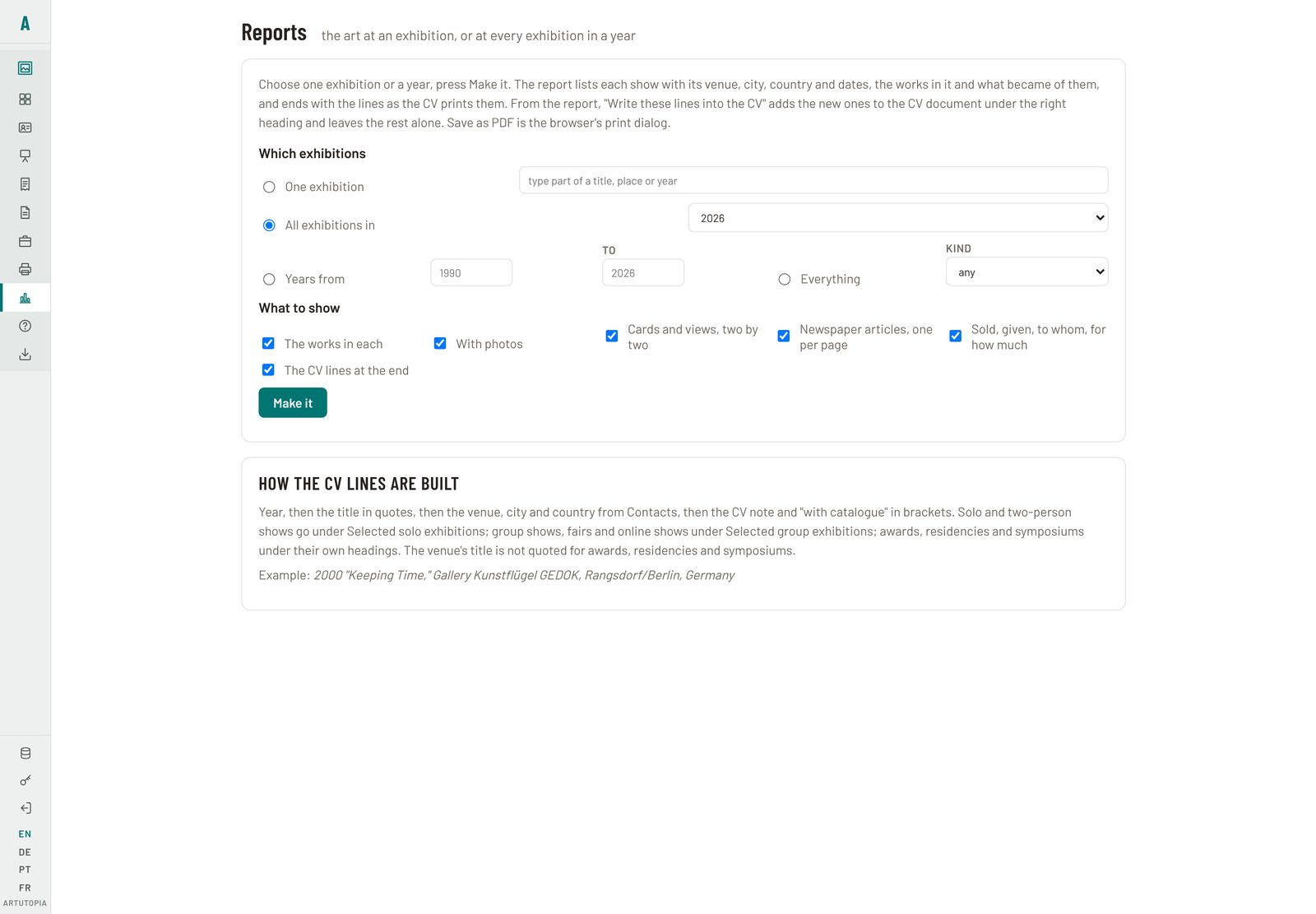
Labels, certificates of authenticity, inventory sheets and portfolio pages come straight out of the Catalogue on your own letterhead, on Letter or A4, on Avery sheets from North America or Europe. Reports write an exhibition history the way a CV wants it.
Each client runs on their own database, in their own folder, with their own logins. No shared pool with anyone else's collection. Hosted in Europe or in North America, as your data requires.
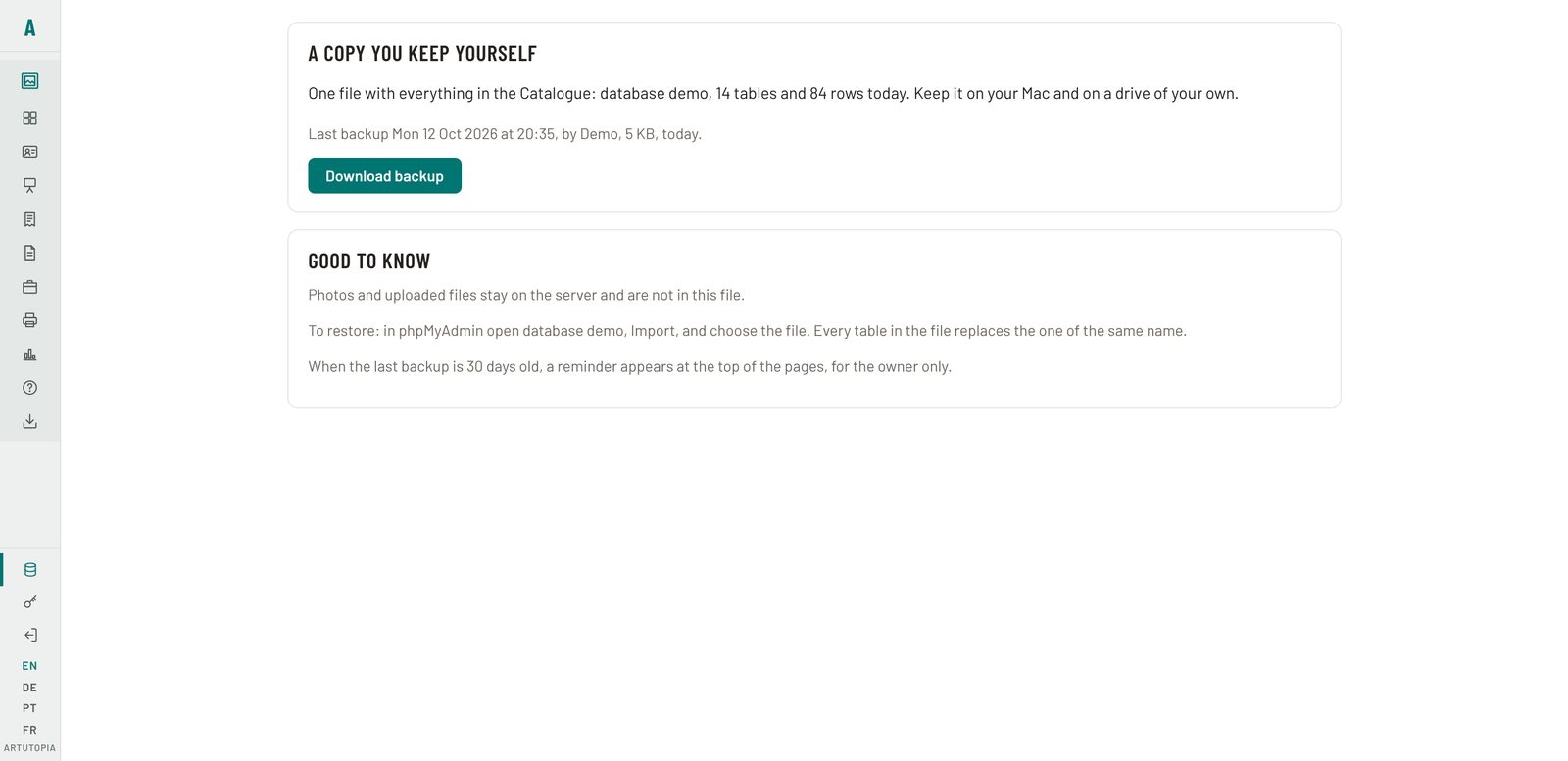
The whole database downloads as one file from the Backup page, and the Catalogue reminds you when the last copy is a month old. Every list exports as a spreadsheet. Your photographs stay in a folder you can copy.
English, German, Brazilian Portuguese and French, switched at the foot of the menu. Dates, numbers, prices and paper sizes follow the language.
Set up for one artist's archive or for a collection of hundreds of artists. Owner and staff logins, an audit trail of who changed what, and one time password links so nobody ever emails a password.
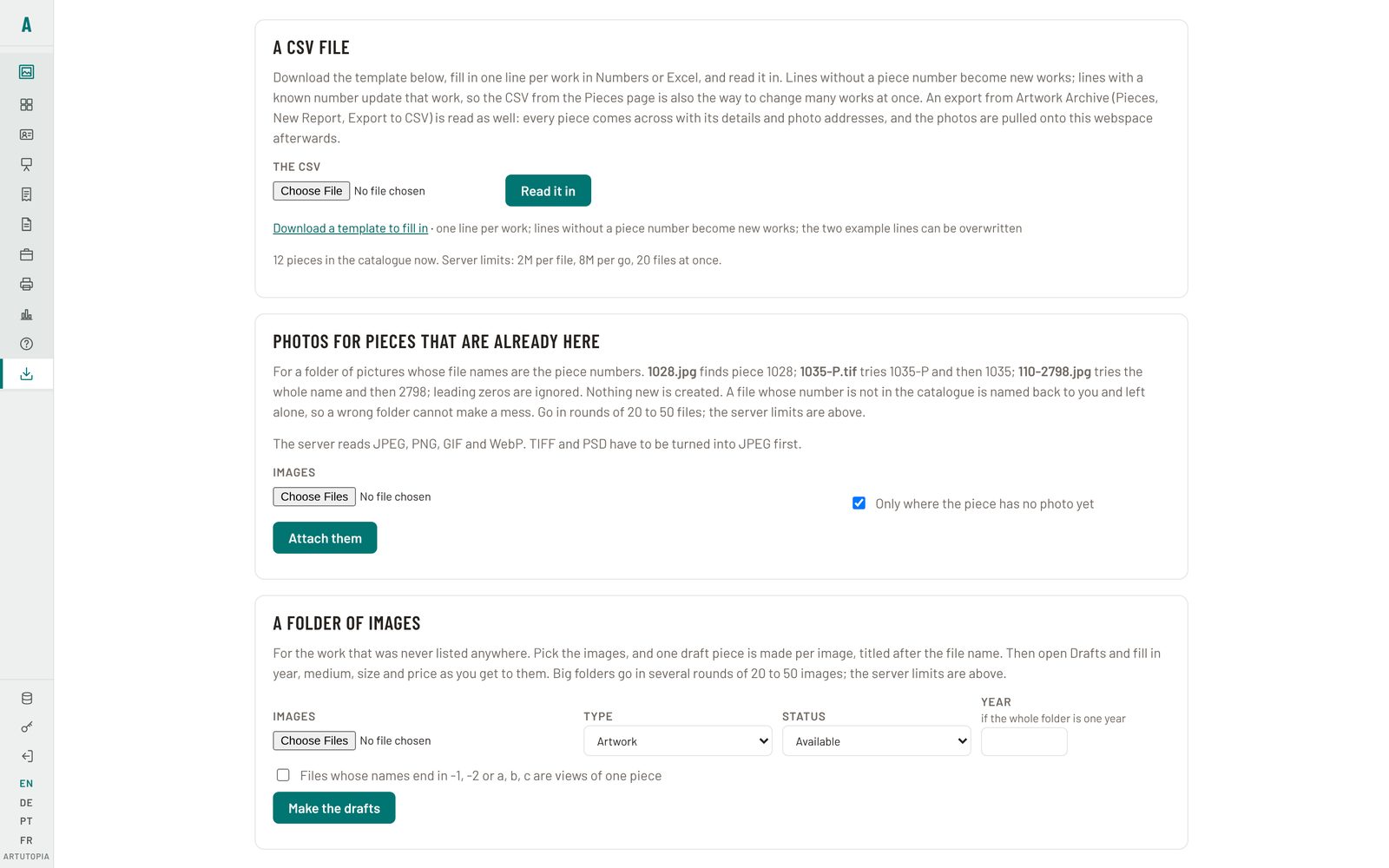
A CSV template, or an export from Artwork Archive with all its images: the Import page reads it, queues the photos and pulls them in. Twelve example works show the way and vanish with one click.
No modules to learn, no fields you will never use. Plain words on every page, a Getting started page with seven steps, and a Feedback link that reaches a person.
Four invented artists, twelve works, a collector, a gallery, the show "Light and Water" and a lightbox. Look around, change things, print a sheet. It resets from time to time.
For a hospital, a corporate collection or a foundation the Catalogue grows by exactly what such a collection needs and nothing else:
A location tree for buildings, floors, units and rooms, with a full movement history per piece. Condition reports with dated photographs and an assessor. Valuation and insurance history instead of a single figure. Attached documents such as appraisals, donor letters and receipts. And a move plan: every piece with its old and new location, printed as a pull sheet per unit, so the relocation of an entire collection runs from one screen.
These are built with the first institutional client, to their floor plan.
A flat yearly subscription in Canadian dollars, set up included, with the number of logins your collection needs. Artists and small studios start at the founding rate. Associations and institutions get a quote for their size and their hosting.
Ask for a quote Artutopia