A Letter to Hayao Miyazaki
Dear Miyazaki san,
You do not know me, and still I have known you for a long time. Twice in my life a film has reached into me and rearranged everything it found there. You made the second one. I want to tell you about both, because without the first, I might not have understood what happened to me when I met your work.
I was a child in Germany when I sat in a cinema for the very first time. The lights went down, and The Jungle Book began. I had never felt anything like it. I was overwhelmed, impressed, pulled so deeply into the story that I forgot where the story ended and I began. I came out of that dark room a different child. That was the day I started to draw. That was the day I began writing my stories down. That was the day I understood, without having words for it yet, what I wanted to be. A single afternoon in front of a lit screen decided the direction of a whole life.
Today I understand this flooding through Human Design. I live with an open emotional centre, an open head, an open Ajna. Feelings and images and questions pour into me from the world, amplified, unfiltered. A story told with truth does not stay on the screen for someone like me. It moves in. It stays.
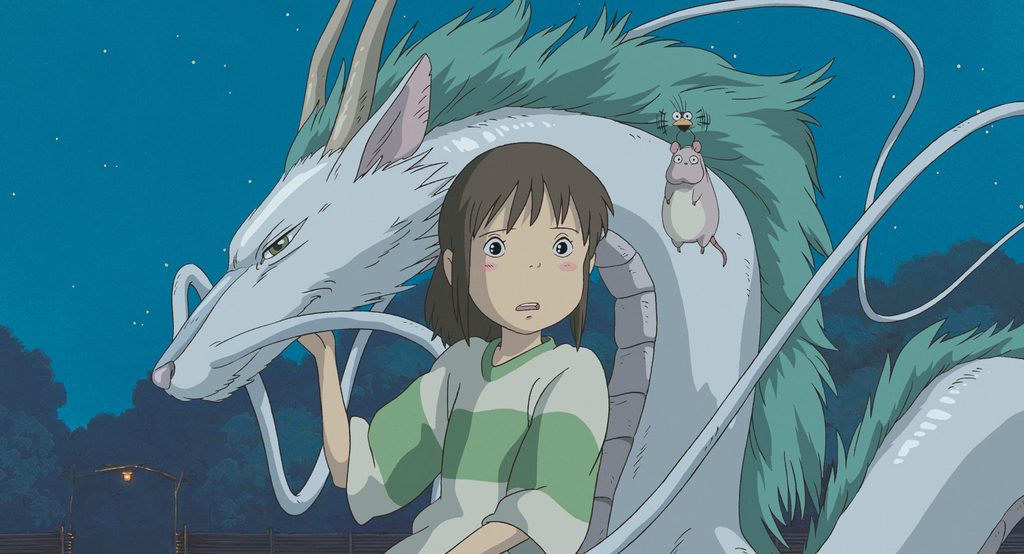
Decades later, I bought a DVD of Spirited Away. I pressed play, and there it was again, that same wave. Your world opened before my western eyes, so spiritual, so beautiful, so full of beings I had never imagined and yet recognized at once. Chihiro, Haku, the bathhouse, the train gliding over the water. I watched it ten times and could not get enough. Then came Nausicaä, and the others, one after another, and each time I met that wonderful mind of yours, inventing characters the way nature invents flowers.
I am seventy now. Watching your films, I am also seven, sitting in the dark for the first time, mouth open, heart wide. You gave me back the child who decided to become an artist. There is no greater gift one artist can give another.
So I did what I do. I looked at your birth chart the way I look at the sky each morning, and I read it. Not about you, but to you, as a letter, the way this one is written. It is my way of saying thank you, from one lifelong maker of worlds to another.
With profound gratitude and admiration,
Stefani Peter Vancouver, August 2026
Reading for Hayao Miyazaki
Born 5 January 1941 at 15:20, Tokyo, Japan
Generator | Emotional Authority | Profile 6/2 | Single Definition Left Angle Cross of Individualism (38/39 | 57/51)
Miyasaki san,
You were born in Tokyo in the first week of 1941, into a world at war, into a family that built parts for airplanes. The sky entered your story before you could walk, and it never left. Your chart tells the story of a fighter who learned what is truly worth fighting for, a hermit who kept being called down from his mountain, and a man whose hands carried a knowing that his head could never fully explain.
Your Incarnation Cross is the Left Angle Cross of Individualism, built from the Gates 38 and 39 on the conscious side and 57 and 51 on the unconscious side. A left angle cross is transpersonal. Your purpose was never only about you. It unfolds through the people your life touches, and in your case that circle grew to include the whole world. Gate 38 is the Gate of the Visionary, the fighter who knows what is worth committing to. Gate 39 is the provocateur who recalibrates, who pokes at what is stagnant until abundance flows again. Gate 57 is pure intuition, the clarity of the body. Gate 51 is the gate of shock and initiation, the courage to leap where no one has leapt before. Struggle, provocation, instinct, and shock: it reads like a synopsis of Nausicaä, of Princess Mononoke, of every story you ever drew. You fought for hand drawn animation when the industry raced toward shortcuts. You fought for forests, for children, for peace, for craft. And you did it as an individualist, on your own terms, in your own rhythm, mutating an entire art form simply by refusing to make anything that did not feel true.
This reading walks through your design chapter by chapter: your Type and aura, your Inner Authority, your defined and open Centers, your Channels, and your Profile. May it read like one of your own films, slowly, with room to breathe.
Your Type: The Generator Aura
You are a Generator, one of the life force people of this planet. Your aura is open and enveloping, warm and magnetic. It draws life toward you so that you can respond to it. The Generator strategy is to respond, to wait until life presents something and then feel whether the sacral motor in your belly says yes or no. When a Generator follows that pull, the signature is deep satisfaction, the quiet hum of a day spent doing exactly the right work. When a Generator initiates from the mind instead, forcing what the body never agreed to, the result is the Generator not self theme, frustration.
Look at how your masterworks actually arrived, and you see the mechanics of response written into film history. You did not sit down one morning and decide, abstractly, to become the most celebrated animator alive. You responded. Toshio Suzuki and the editors at Animage asked, and the Nausicaä manga began. The film was asked for, and you answered, and out of that response Studio Ghibli was born in 1985. A neighbour’s forest, a sick child, a chance image of a creature at a bus stop, and My Neighbor Totoro rose up out of the responding. Time and again your best work came when the world brought you something and your belly said, unmistakably, yes.
And the frustration is in the record too. You announced your retirement again and again, after Princess Mononoke, after Ponyo, most famously after The Wind Rises in 2013. Each time, the mind declared the work finished. Each time, the sacral motor, which does not retire, pulled you back to the drawing board, until The Boy and the Heron carried you, at eighty three, to your second Academy Award. A Generator’s energy is renewed by right work and depleted by wrong work, and yours was so clearly renewed that the world simply watched you outdraw men half your age, frame after hand drawn frame, decade after decade. That legendary stamina, the thousands of frames you personally corrected, the fifty year working life, all of it is the defined Sacral Center doing what it was built to do: generate.
The invitation of your Type is trust. Trust that what is yours will come to you to be responded to. It always has.
Your Inner Authority: The Emotional Wave
Your Inner Authority is Emotional. With a defined Solar Plexus Center, your truth does not arrive in the moment. It arrives over time, riding a wave that moves through hope and disappointment, through elation and melancholy, until it settles into clarity. The emotional being’s mantra is simple and demanding: there is no truth in the now. Wait. Sleep on it. Feel it from the top of the wave and from the bottom, and only then decide.
Your entire body of work testifies to this wave. You never made fast films. Each one took years, and you famously refused storyboards that were finished before production began, letting the ending reveal itself while the film was already being drawn. That is emotional authority as a creative method: refusing premature certainty, waiting for the story to become clear through time and feeling. It is also why your films feel the way they do. They hold sadness and joy in the same frame. Totoro contains a mother’s illness and pure childhood delight. The Wind Rises holds the beauty of flight and the grief of what flight was used for. Only a person who has lived the full wave, who has stopped pretending that life is either happy or sad, can draw both truths into a single image.
The wave has a shadow side, and you have never hidden yours. The dark moods in the studio, the despair halfway through every production, the announcements made at the bottom of the wave, retirement among them, which the top of the wave later revised. This is the practice of the emotional being: to feel everything fully and to sign nothing at either extreme. Your clarity lives in the calm after the wave has passed, and your life shows that when you waited for it, what you built endured.
Your Open and Defined Centers
You carry four defined Centers, the Sacral, the Solar Plexus, the Spleen, and the Heart, joined in a single definition, one unbroken circuit of life force, feeling, instinct, and will. Five Centers are open in you: the Head, the Ajna, the Throat, the G Center, and the Root. The defined Centers are your reliable, consistent energies, the engine room. The open Centers are where you take the world in, where you learned your deepest wisdom, and where conditioning once pressed hardest.
Your Defined Sacral: The Engine
The Sacral is the motor of workforce and life force, and yours is defined and carries Gate 34, the Gate of Power, and Gate 27, the Gate of Caring and Accountability, and Gate 59, the Gate of Sustainability and Intimacy. This is the stamina the whole animation world spoke of with awe. You drew when others delegated. You corrected key frames yourself into your eighties. The 27 gives your energy a nurturing direction; so much of your work is, at heart, care for children, care for the land, care for the craft and the young animators you trained. The Gene Keys read Gate 27 as the journey from selfishness through selflessness toward altruism, and your insistence that films must nourish the children who watch them is that gift made visible.
Your Defined Solar Plexus: The Deep Feeler
Here lives your authority and your palette. Gate 6, carried by Neptune on both sides of your chart, gives you the friction that creates intimacy, the emotional boundary that decides who and what may come close. The Solar Plexus makes you a creature of moods and of romance in the oldest sense, a lover of food, weather, and atmosphere. It is why rain in your films is wet, why bread in your films makes the whole world hungry, why audiences cry at scenes where, on the surface, nothing happens. You broadcast feeling. Defined emotional beings set the emotional weather of every room they enter, and you set the emotional weather of world cinema for forty years.
Your Defined Spleen: The Old Animal Knowing
The Spleen is the oldest awareness in the body, the center of instinct, health, timing, and survival. Yours is defined and carries Gate 57, intuitive clarity, Gate 44, the nose for patterns of the past, Gate 48, the well of depth, and Gate 18, the drive toward correction and perfection. This is an extraordinary splenic lineup for an artist. The 57 hears truth in the now. The 44 remembers, it recognizes what worked and what failed across time, in people and in history. The 48 gives depth of craft, the deep well every frame is drawn from. And the 18 is the corrector’s eye, the gate of the perfectionist who cannot let a flawed drawing pass. Your studio knew this gate well. Every frame crossed your desk, and the standard never dropped. The Gene Keys call Gate 18 the journey from judgement through integrity toward perfection, and your filmography may be its cleanest illustration in modern art.
Your instinct also speaks in your stories. The wolf gods, the forest spirits, the animal knowing that your heroines trust when nothing rational supports them, all of that is splenic awareness given form.
Your Defined Heart: The Will
The Heart Center is willpower, worth, and the making and keeping of promises. Yours is defined through Gate 26, the Gate of Integrity and the transmitter, and Gate 21, the Gate of Self Regulation, the hunter who must control his own resources, with Gate 51, shock and initiation, adding its courage. Defined Heart people can promise and deliver, and the world learns to lean on that. You promised impossible films on impossible schedules and willed them into existence. The 21 needed control over the work, and history vindicated that need: Ghibli’s refusal to cut its films for foreign markets protected them. The 51 made you the initiator, the one who leaps first, who dared a feature length ecological epic in 1984 when the market wanted something safer, and who kept leaping until the very last film.
Your Open Head and Ajna: The Inspired Mind
The Head and Ajna Centers, the pressure to be inspired and the processing of thought, are both open in you. An open head takes in inspiration from everywhere and everyone, and an open Ajna holds no fixed way of thinking. Here is the secret of your imagination’s range. European children’s literature, Jules Verne, Welsh mining villages, Ukiyo-e prints, aviation engineering journals, a French animator’s brushwork, all of it flowed in and was welcome. Fixed minds defend their concepts. Your open mind wandered, wondered, and turned other people’s questions into worlds. The wisdom of these open centers is knowing which inspirations are worth holding, and by the second half of your life you had become a master curator of wonder. Castles that move, cities in the sky, bathhouses for tired gods: an open Head Center, working at its highest frequency, on paper.
Your Open Throat: The Voice That Waits
The Throat, the center of manifestation and speaking, is open in you, carrying Gates 8, 23, and 31 without a full channel. An open Throat learns that words alone do not make things happen, and often struggles to be heard in ordinary conversation, and you were never known as a fluent talker. Your interviews are famously gruff, reluctant, brief. But the open Throat’s gift is that it speaks with the voice the moment requires, and yours learned to speak through the work. When the sacral responded and the wave was clear, the films said everything, in every language at once, without a single wasted word. Gate 8 is the gate of the exemplary contribution, and Gate 31 is the gate of the leader whose influence is called forth by others. You never campaigned for leadership of your art form. It was conferred on you, which is precisely how these gates work at their best.
Your Open G Center: Identity Through Place
The G Center, home of identity, love, and direction, is open in you, with Gate 46, the love of the body and being in the right place, and Gate 2, the gate of direction, as its doorways. Open G beings have no fixed identity. They taste the identity of every place and every love they enter, and they are exquisitely sensitive to environment. The old wisdom for the open G is that place decides everything: in the right place, the right life. You built right places obsessively. The studio, the Ghibli Museum, the atelier, and your chart even names Mountains as your ideal environment. More beautifully still, your art is largely about place. Your camera lingers on landscapes the way other directors linger on faces. Every film asks the open G question: where do I belong, and who am I when I am there? Chihiro in the bathhouse, Kiki in the new town, Sophie in the moving castle. You gave your own openness to your characters and let them find themselves by finding their place, and audiences everywhere recognized their own search in it.
Your Open Root: Pressure Made Fruitful
The Root Center, the pressure of stress and adrenaline, is open, and yet it carries the conscious Sun and Earth of your whole life purpose, Gates 38 and 39, together with 41, the gate of imagination and the fantasy that starts every human story. An open Root feels the world’s pressure intensely and must learn not to be driven by it, not to rush merely to clear the desk. Deadline pressure at an animation studio is a Root Center storm, and you lived inside it for half a century. The lesson of the open Root, that pressure is fuel to be surfed rather than a whip to be obeyed, shows in your refusal to release a film before it was ready. And Gate 41, the initiating gate of the whole human experiential way, sits here on your design Moon: the dreamer’s gate, the fantasy that presses to become experience. Few charts wear it so publicly. Entire generations now dream in images that began as pressure in your Root.
Your Channels
Three channels join your centers into one continuous current.
Channel 34-57: The Channel of Power
Sacral to Spleen, pure power joined to pure intuition. This is the archetype channel of survival, the design of a being whose life force is guided instant by instant by the body’s knowing. It gives busy hands that are wiser than the head, mastery that looks effortless because it never detours through deliberation. Watch any documentary footage of you drawing and you are watching 34-57: the pencil already knows. This channel also hums inside your stories, where survival, nature, and instinct are the great themes, and where the characters who listen to their animal knowing are the ones who come through. It is worth smiling at the fact that Gates 57 and 51 form the unconscious arm of your Incarnation Cross. Your intuition was never private. It was the purpose itself.
Channel 26-44: The Channel of Surrender
Heart to Spleen, the transmitter joined to the memory of the past. Tradition calls this the channel of the entrepreneur, the one who can take what matters and bring it to the marketplace without betraying it. Here is Studio Ghibli, the improbable company that sold utterly uncommercial convictions to the whole world and thrived. The 44 remembers what history teaches, the cost of war, the price of greed, the old crafts worth saving, and the 26 has the will and the skill to transmit that memory so compellingly that people pay to receive it. At its highest frequency this channel is integrity in commerce, and Ghibli under your pencil became exactly that, proof that the market will surrender to quality if the quality never surrenders to the market.
Channel 6-59: The Channel of Intimacy
Sacral to Solar Plexus, the channel of mating, of breaking down the barriers between beings so that something new can be conceived. In a life this channel creates closeness, families, fertile partnerships, and yours held one marriage of more than sixty years and one creative partnership, with Isao Takahata and Toshio Suzuki, that lasted a lifetime. In an artist it does something more: it dissolves the barrier between the work and the audience. Your films create intimacy with strangers. Children who share no language with you feel personally known by Totoro. Gate 6, on your Neptune in both directions, carries the Gene Keys journey from conflict through diplomacy toward peace, and peace, quietly and without preaching, is what your films have always argued for.
Your Profile: 6/2, The Role Model Hermit
You carry the 6/2 Profile, the Role Model above, the Hermit below, one of the rarest and most distinctive profiles in the system, and your biography follows its script with almost uncanny fidelity.
The sixth line lives its life in three acts. Until about age thirty it lives like a third line, experimenting, colliding with the world, learning by trial and error. You joined Toei Animation in 1963 and took every job given, from in between drawings to key animation to scene design, learned by drawing everything, tried and failed to launch your own projects, and absorbed the craft from the floor up. Around thirty, the sixth line withdraws to the roof, a long middle period of watching, healing, and building mastery at a certain remove. Your thirties and forties were the roof years: Future Boy Conan, Castle of Cagliostro, then Nausicaä in 1984 and the founding of Ghibli in 1985, the patient construction of a body of work and a place to make it. And around fifty the sixth line is asked to come down from the roof and live as the Role Model, transparent, visible, an example of what an authentic life looks like. You were fifty six when Princess Mononoke shook world cinema, sixty two when Spirited Away won the Academy Award, seventy three when the Academy honoured your lifetime, eighty three when The Boy and the Heron won again. The world did not merely enjoy your late films. It watched how you worked, how you refused shortcuts, how you kept faith with the hand and the pencil, and it called that example a standard. That is the sixth line’s harvest: authority earned by being witnessed living one’s truth.
Beneath the Role Model sits the second line, the Hermit, the natural talent who wants to be left alone in his own space, working, and who is nevertheless perpetually called out by others who see gifts the hermit himself takes for granted. Every one of your retirements was the Hermit closing his door. Every return was the call reaching him anyway, through Suzuki, through a story that would not leave, through the children not yet born who would need one more film. The 6/2 makes peace with this rhythm rather than winning against it: withdraw to be replenished, answer the call when it is true. Your final act, emerging from retirement to make a film titled, in Japanese, How Do You Live?, addressed to the young, is the purest 6/2 gesture imaginable. The Hermit came out one more time, as the Role Model, to answer the only question a role model exists to answer.
Closing
Yours is a chart of remarkable coherence. The fighter of Gate 38 found causes worthy of a lifetime. The provocateur of Gate 39 recalibrated an entire industry. The intuition of 57 drew what the mind could never have planned, and the shock of 51 kept leaping into the new until the very end. A Generator responded, an emotional wave took its time, a Hermit withdrew and a Role Model came down from the roof, and the world is measurably more tender, more wild, and more careful with its forests because of it. Satisfaction, the Generator’s signature, is written across this life the way light is written across your skies.
Human Design is a knowledge system that can also aid you in healing. Always remember what you read here is malleable and it comes in higher or lower frequency. Human Design is an experiment and it is especially here for the children. Try out what resonates with you and reflect about what you find challenging.
Disclaimer: The Human Design readings and information provided here are for educational and self-exploration purposes only. They are not intended as psychological, medical, or therapeutic advice. Please consult qualified healthcare professionals for any medical or mental health concerns.
Calculated with the Artutopia Ephemeris (Swiss Ephemeris). QHD gate names © Karen Curry Parker | Gene Keys spectrum © Richard Rudd | Human Design transmitted by Ra Uru Hu. © 2026 Artutopia | artutopia.ca | Stefani Peter
